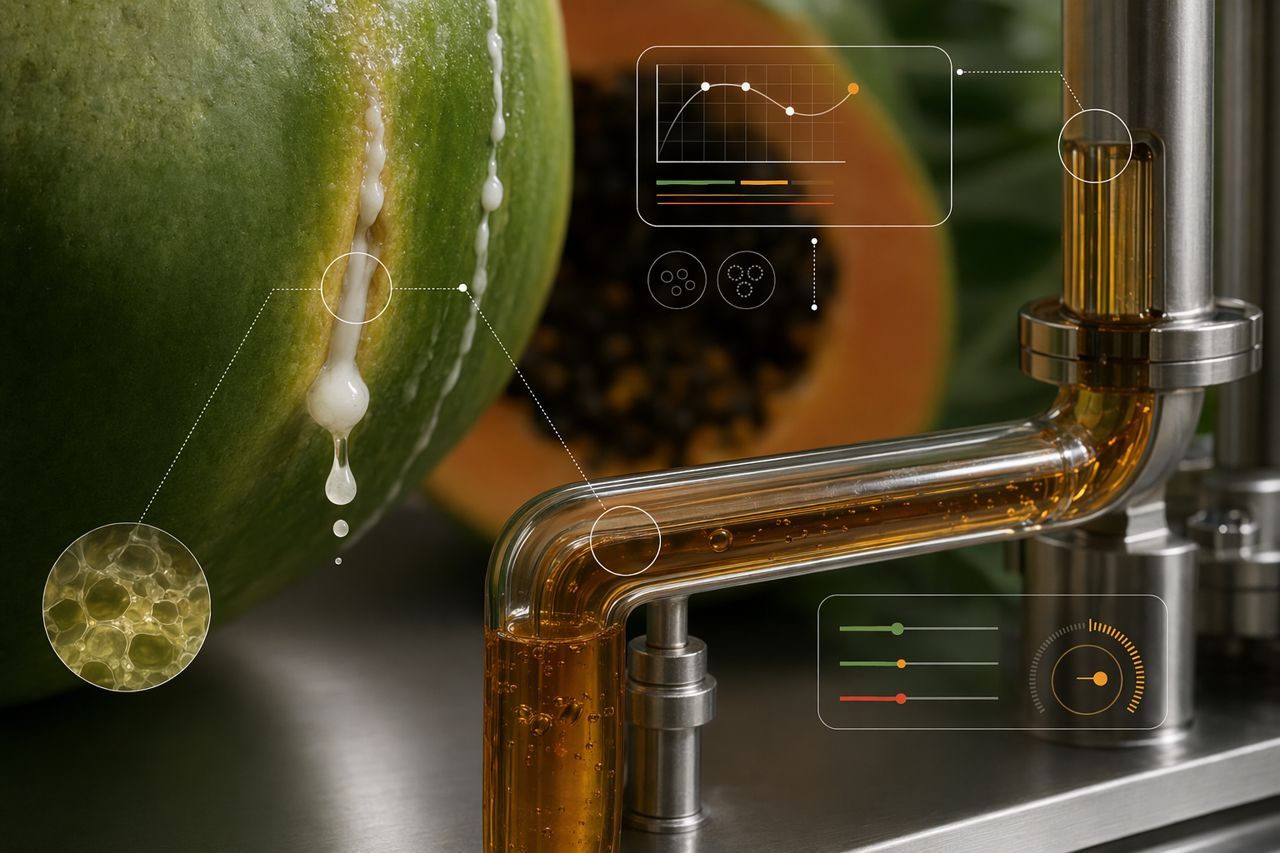
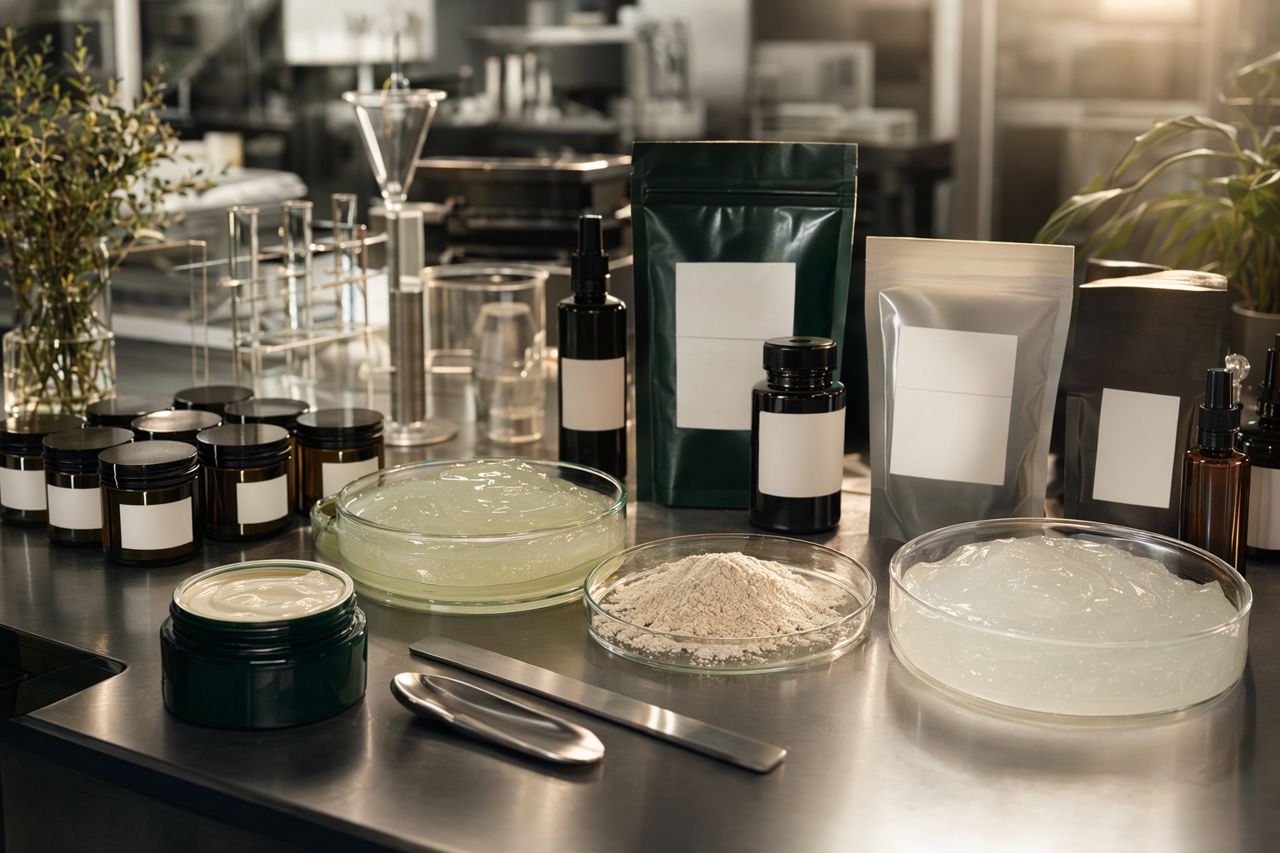
Papain from Papain Enzyme Solutions for cosmetic and personal-care development goes into enzyme masks, rinse-off peels, powder-to-foam cleansers, body polishes, scalp and foot-care products, where it loosens keratin-rich surface debris without relying on abrasives. It is supplied in bulk to brands, contract manufacturers, distributors and resellers, with format and pricing given by quotation. Request a bulk quote through the form on this page, naming your product format, process and target market.
Papain for Enzymatic Exfoliation
Papain gives cosmetics and personal care formulators a practical route to enzymatic exfoliation: targeted breakdown of proteinaceous surface material that can contribute to rough texture, dull appearance, and uneven product feel.
For B2B teams developing rinse-off masks, powder cleansers, gel peels, body exfoliants, scalp products, and foot-care formats, Papain can support a smoother sensory profile without depending solely on abrasive particles or aggressive acid positioning.
Why Papain is used in exfoliating personal care
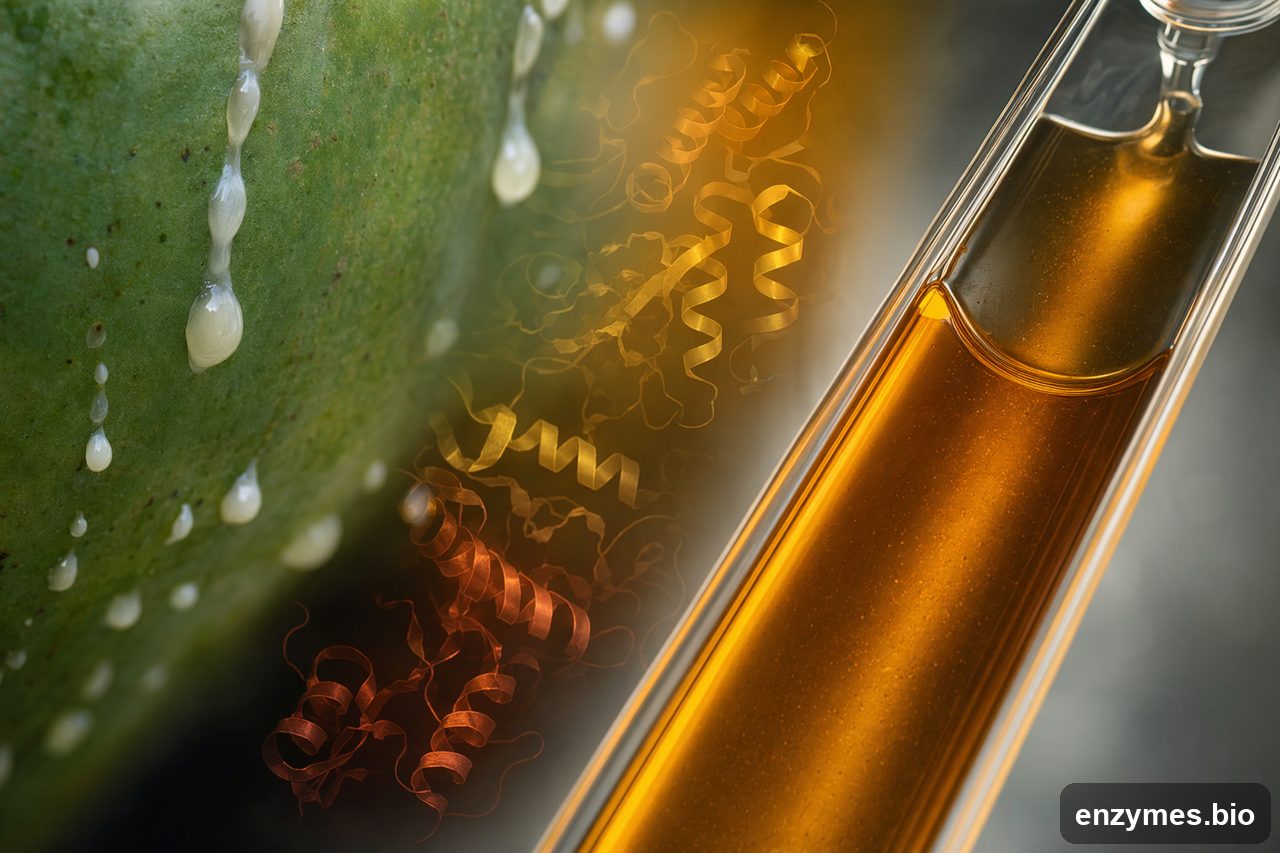
Papain is a proteolytic enzyme derived from papaya latex. In cosmetic applications, it is valued for its ability to help loosen and break down keratin-rich debris on the skin surface. That makes it useful where a formulation needs perceptible exfoliating performance while preserving an elegant product experience.
Common product directions include:
- Enzyme masks and rinse-off peels
- Powder-to-foam enzyme cleansers
- Cream and gel exfoliating treatments
- Body polishing formulations
- Foot-care and heel-smoothing products
- Scalp care products targeting surface buildup
- Hybrid formulas combining enzymes with gentle physical exfoliants
Formulation outcomes buyers care about
Papain is selected when a brand or manufacturer needs more than a marketing ingredient. In the right formulation architecture, it can contribute to:
- Cleaner surface feel: helps reduce proteinaceous buildup that can affect texture and radiance.
- Reduced reliance on harsh abrasion: supports exfoliation concepts with a smoother, less gritty sensory profile.
- Flexible product positioning: compatible with spa, dermocosmetic, botanical, clean-beauty, and professional-use narratives.
- Process-efficient development: useful across dry, semi-dry, and rinse-off systems when stability is designed correctly.
- Repeatable user experience: supports controlled exfoliation when ingredient quality, hydration behavior, and processing conditions are managed.
Where Papain fits in cosmetic formats
Powder cleansers and dry enzyme masks
Dry systems are often preferred when formulators want to protect enzyme performance until the consumer activates the product with water. Papain can be blended into powder cleansers, anhydrous mask bases, or dry sachets where controlled activation is part of the user experience.
Key considerations include particle distribution, dust control, fragrance compatibility, and uniform dispersion throughout the powder base.
Gel peels and rinse-off masks
Water-containing systems require more deliberate stabilization. Papain performance can be affected by water activity, pH, chelators, preservatives, botanical extracts, fragrance components, and processing temperature. These formats benefit from early compatibility screening rather than late-stage ingredient substitution.
Creams, balms, and hybrid exfoliants
Papain can be used in richer sensory systems when the formulation protects enzyme integrity and releases activity at the point of use. It is frequently evaluated in combination with clays, cellulose particles, jojoba esters, fruit-derived acids, or moisturizing agents to balance efficacy and after-feel.
How personal-care manufacturers actually use papain
Papain reaches a personal-care product by two separate routes, and they lead to two different purchasing decisions. The first route is direct addition: papain goes into toothpaste to raise cleaning power and into facial cleansers as the exfoliating active. The second route uses papain as a processing enzyme: it hydrolyses a protein into a small-peptide extract, and that extract, not the enzyme, is what goes into premium skin-care lines.
| Route | Where papain ends up | What the buyer should specify |
|---|---|---|
| Direct addition: toothpaste | In the finished paste, supporting cleaning | Stability in the paste base and over shelf life |
| Direct addition: facial cleanser or mask | In the finished product as the exfoliating active | Activity in the product's pH and next to its other ingredients |
| Peptide extract production | In the hydrolysis step only; the extract is sold on | Hydrolysis performance on your protein, and how the enzyme is stopped |
What end users expect, and where papain falls short
Skin-care users describe papain as a gentle exfoliant that suits mild roughness and fine surface keratin flakes. The same users point out its limits: it has no ability to dissolve oil, so it does little for deep closed comedones. They also note that its activity depends on pH and on what else is in the formula. For a brand, sell papain products on smoother texture and gentle renewal, not on pore clearing.
Mistakes that cost a launch
- Buying one grade for both routes, although direct addition and peptide-extract hydrolysis are two different jobs.
- Promising pore clearing from papain alone, which users quickly find it does not deliver.
- Testing the enzyme in water and not in the real base, although pH and the other ingredients change its activity.
Technical formulation considerations
Papain is formulation-sensitive. Successful commercial products typically manage the following variables from the first development phase:
- pH environment: design the system around the desired balance of enzyme performance, skin feel, preservative efficacy, and claim strategy.
- Water exposure: decide whether performance should remain dormant until use or be active within a hydrated finished product.
- Heat history: avoid unnecessary high-heat exposure during processing and filling.
- Preservative system: screen antimicrobial systems for compatibility rather than assuming interchangeability.
- Fragrance and botanical load: evaluate essential oils, aromatic compounds, extracts, and colorants for possible enzyme interaction.
- Packaging: consider moisture barrier performance, headspace, dispensing behavior, and consumer dosing accuracy.
- Consumer instructions: align contact time, rinse behavior, and usage frequency with the intended product experience.
Procurement and scale-up notes
For manufacturers, Papain sourcing is not only a question of price. Batch-to-batch consistency, documentation, handling behavior, and supply reliability directly affect development timelines and finished-product reproducibility.
When evaluating Papain for personal care, procurement and R&D teams should align on:
- Product format and water exposure profile
- Target market positioning and label expectations
- Required documentation for cosmetic manufacturing
- Allergen, vegan, botanical, and origin-related requirements
- Powder handling constraints in the plant
- Packaging format and expected shelf-life model
- Production sequence, blending steps, and temperature exposure
Papain Enzyme Solutions supplies Papain for industrial formulation teams that need dependable integration into cosmetic and personal care manufacturing workflows.
Application guidance by product type
| Product type | Papain role | Development focus |
|---|---|---|
| Powder enzyme cleanser | Activated during washing | Moisture control, blend uniformity, foam system compatibility |
| Rinse-off mask | Controlled exfoliating effect | Contact time, pH, sensory profile, preservative compatibility |
| Gel peel | Surface smoothing and debris breakdown | Stability, clarity or opacity goals, packaging protection |
| Foot-care product | Helps address rough surface buildup | Contact time, thickener choice, consumer instructions |
| Scalp treatment | Targets proteinaceous surface material | Mildness, rinse behavior, surfactant compatibility |
| Hybrid body polish | Supports exfoliation alongside particles | Particle feel, enzyme protection, fragrance screening |
Quality profile for cosmetic manufacturing
Papain Enzyme Solutions focuses on Papain suitable for B2B cosmetic and personal care development, with attention to practical manufacturing needs: consistent performance profile, manageable powder behavior, documentation support, and clear communication around application fit.
We do not treat Papain as a generic commodity. For exfoliation products, the right material must fit the formula, the processing line, the packaging system, and the user experience.
Request a wholesale quote
We supply papain for exfoliating masks, cleansers, toothpaste and peptide-extract production in bulk to manufacturers, distributors and resellers, on a quote-only basis. To get a recommendation and a price, send: the product or application, the quantity (trial lot, monthly or annual), the destination country, and the process step where the papain will be used. Format (powder or liquid) and pack size are quoted per order; tell us your preference if you have one.