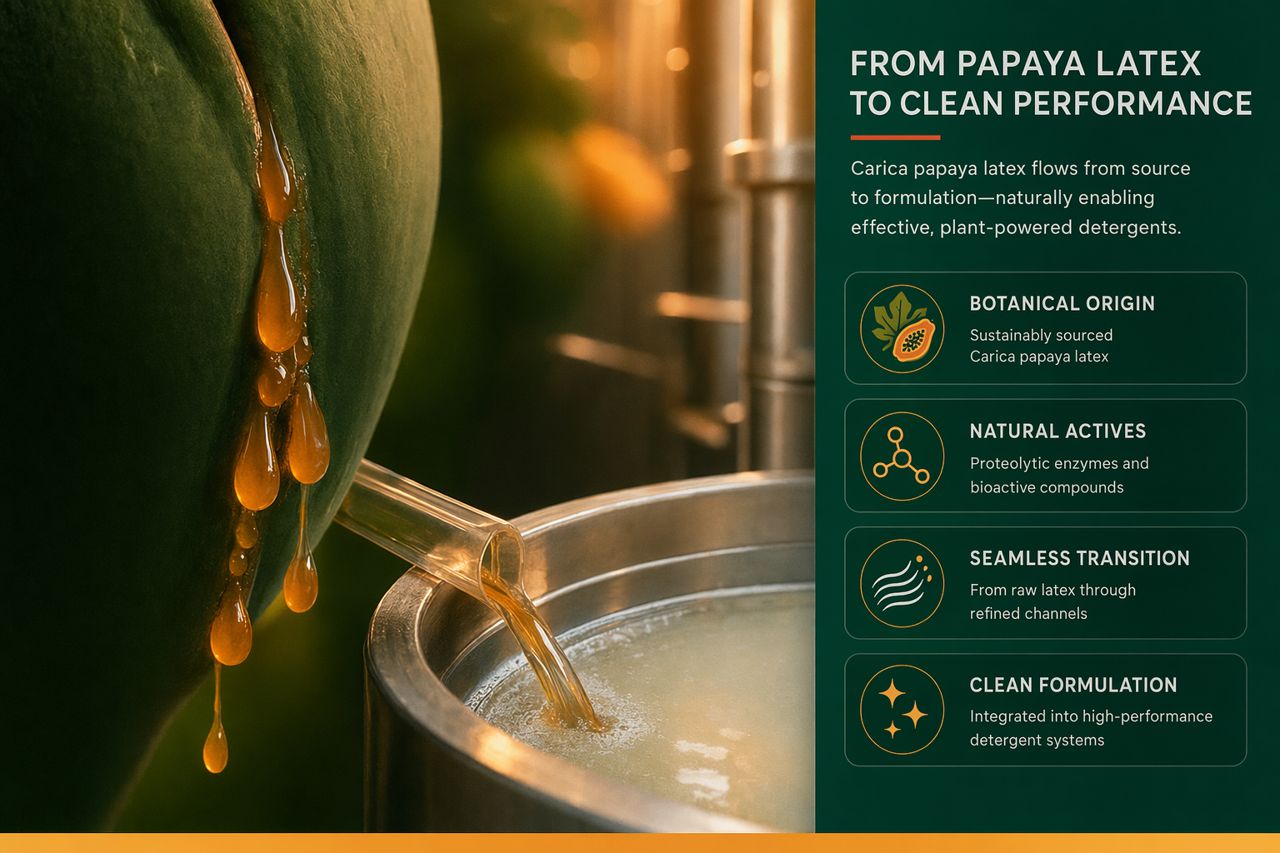
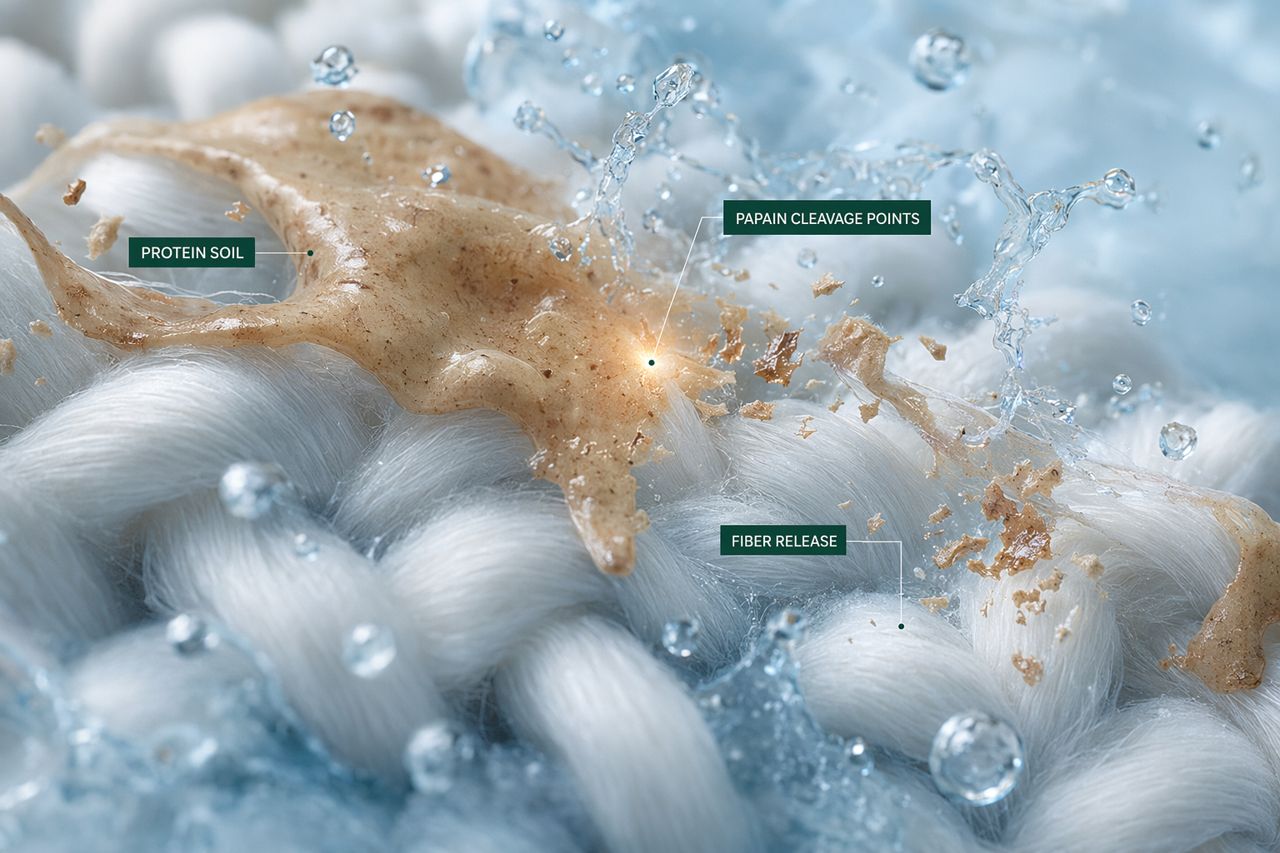
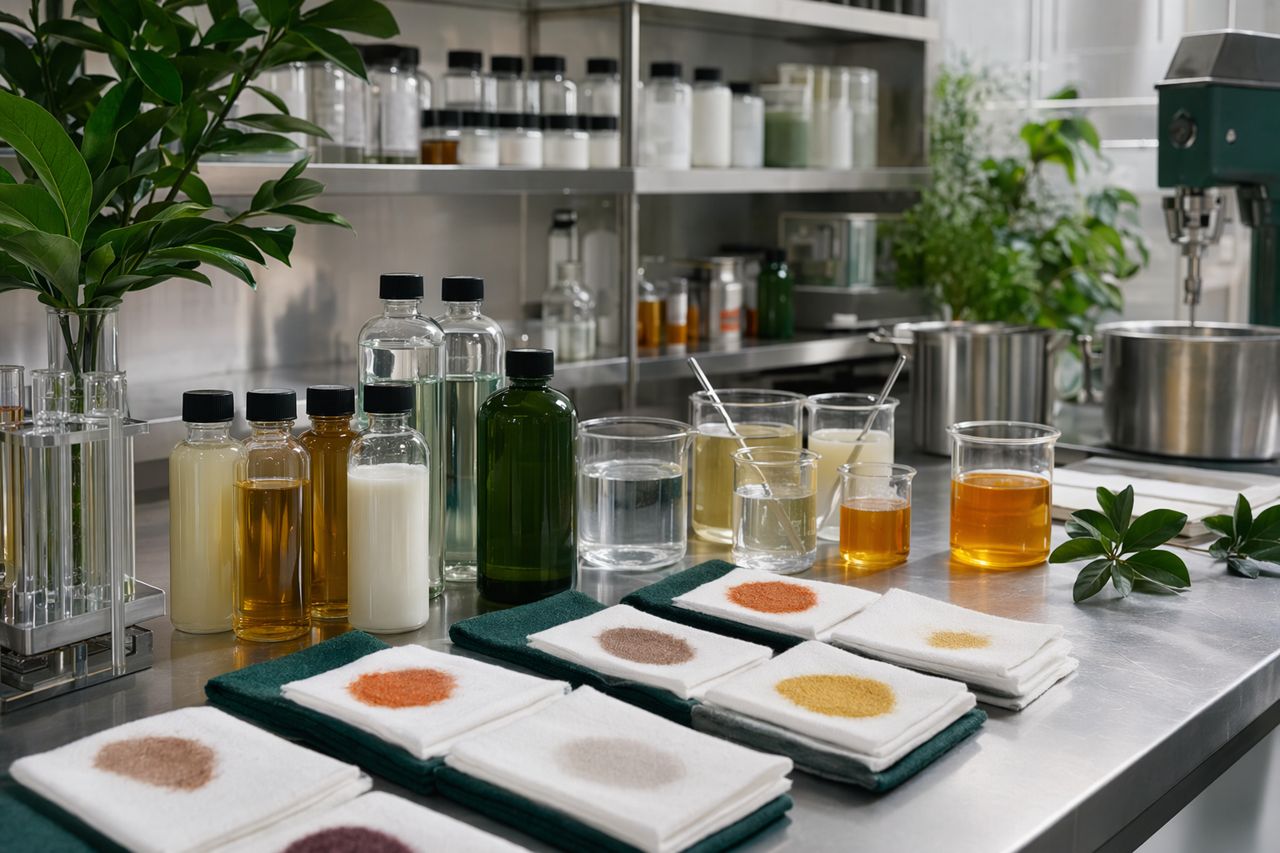
In detergent and cleaning products, papain is the plant-derived protease used in laundry stain pretreatments, detergent boosters, specialty soaks and surface cleaners to break down blood, egg, dairy and other protein soils. Papain Enzyme Solutions supplies it in bulk to detergent and cleaning-product manufacturers, private-label formulators, distributors and resellers; pricing is by quote, and liquid, powder and pretreatment-gel systems each need their own stabilisation approach. To inquire, use the quote form at the foot of this page and tell us the application, target format, packaging plan and performance benchmark.
Papain for Protein Stain Removal
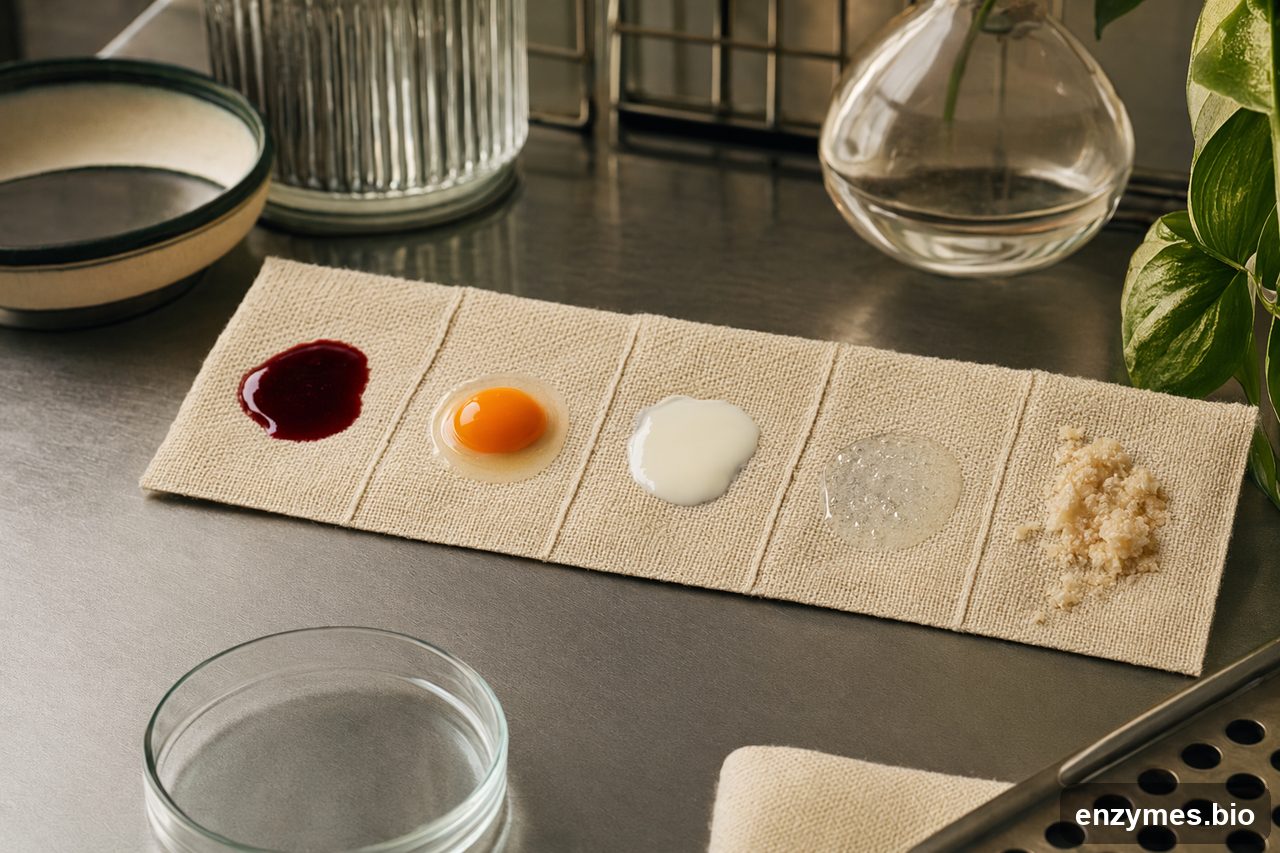
Protein soils are rarely simple. Blood, egg, dairy, sweat, grass-associated protein residues, and food films can bind tightly to fibers and porous surfaces, then become harder to remove after heat, drying, or repeated wear. Papain gives detergent and cleaning formulators a plant-derived protease option for breaking down these soils before they become permanent appearance defects.
Papain is positioned for B2B teams building laundry additives, stain pretreatments, surface cleaners, specialty soaks, and niche cleaning systems where performance, sourcing profile, and formulation discipline all matter.
What Papain does in cleaning systems
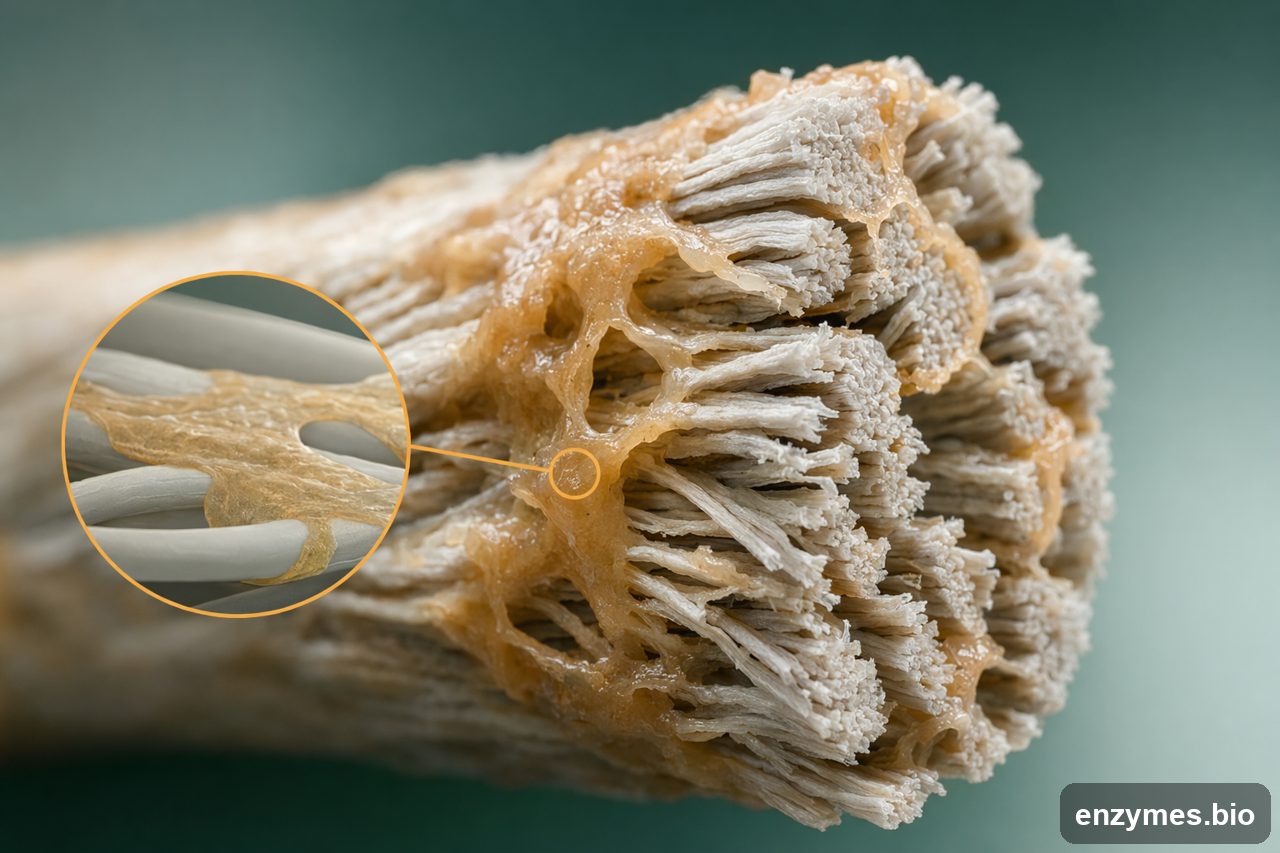
Papain hydrolyzes protein structures into smaller, more dispersible fragments. In practical cleaning terms, that can support:
- Improved release of protein-based stains from textile fibers
- Better removal of dried food residues and body-soil components
- Reduced visible residue in pretreatment and soak formats
- Lower dependence on aggressive mechanical action in selected applications
- More consistent cleaning aesthetics when enzyme exposure time is designed into the product experience
Papain is not a universal soil remover. It is most useful when the stain challenge contains a meaningful protein fraction and the formulation gives the enzyme enough water contact, time, and compatible chemistry to work.
Application fit
Laundry stain pretreatments
Papain can be used in spray, gel, stick, or liquid pretreatment concepts designed for proteinaceous stains before the main wash. This is often where enzymes deliver the clearest consumer-visible benefit because contact time is intentional and localized.
Key formulation priorities:
- Maintain enzyme stability through shelf life
- Control viscosity without limiting enzyme access to the stain
- Avoid chemistry that rapidly deactivates protease function
- Design labeling and use instructions around dwell time and fabric compatibility
Laundry detergents and boosters
In detergent powders, liquids, pods, and boosters, Papain may support broader stain coverage when paired with surfactants, builders, and other cleaning aids. It is especially relevant for brands seeking a plant-derived protease story while still maintaining technical credibility.
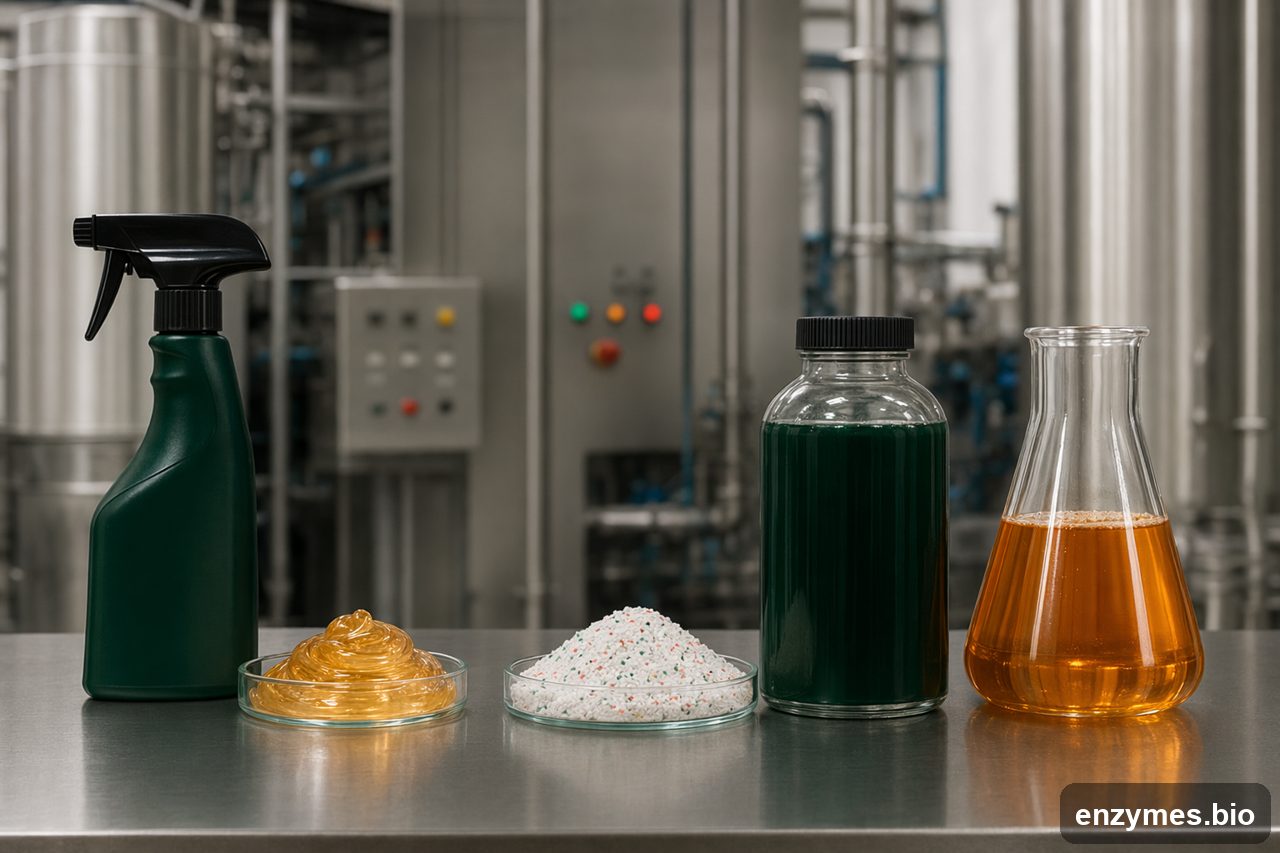
Commercial development should focus on:
- Compatibility with the base surfactant package
- Protection from oxidizing systems where applicable
- Storage stability under intended temperature and humidity exposure
- Performance across realistic wash conditions, not only ideal laboratory scenarios
Hard-surface and specialty cleaning
Protein films appear in kitchens, food-contact-adjacent environments, equipment cleaning, and certain institutional cleaning tasks. Papain may be considered for specialty cleaners where mildness, residue reduction, or enzymatic soak performance is valued.
Typical use cases include:
- Food residue loosening before wiping or rinse-off
- Protein film reduction in soak-based cleaning routines
- Upholstery, carpet, and textile spot-cleaning concepts
- Specialty formulations where a botanical enzyme profile supports product positioning
Formulation considerations
pH, temperature, and dwell time
Papain performance depends on the full use environment. pH, temperature, water availability, soil load, and contact time all influence stain removal. A technically sound formulation should be evaluated under the actual consumer or institutional use pattern: quick spray-and-wash, extended soak, low-temperature laundry, or manual wipe-down.
For many cleaning products, the decisive question is not whether Papain can hydrolyze protein. It is whether the finished formulation preserves enough functional enzyme through manufacturing, storage, transport, and use.
Compatibility with detergent chemistry
Papain should be screened against the full formula, including:
- Anionic, nonionic, amphoteric, and specialty surfactants
- Builders, chelants, salts, and pH adjusters
- Preservatives, solvents, fragrances, and dyes
- Encapsulation or carrier systems in dry formats
- Oxidants, bleach systems, and high-reactivity additives
Strong oxidizing environments and harsh processing conditions can reduce protease effectiveness. If the concept requires bleach compatibility or high-stress storage, protective design choices should be evaluated early rather than corrected late.
Format selection
Papain can be developed into different commercial cleaning formats depending on the intended product architecture.
- Liquid systems: require stabilization against water activity, pH drift, preservative interactions, and long storage exposure.
- Powder systems: require attention to humidity, dust control, dispersion, and uniform distribution.
- Pretreatment gels: require balanced rheology so the product stays on the stain while still enabling enzyme-soil contact.
- Soak products: benefit from clear instructions around dilution, time, and compatible materials.
Performance development framework
Papain Enzyme Solutions recommends building Papain into cleaning formulations through a staged validation model.
- Define the stain set. Select representative protein soils such as blood, egg, dairy, sweat, food residues, or mixed body soil.
- Map the use case. Establish whether the product is a pretreat, wash additive, soak, surface cleaner, or professional cleaning concentrate.
- Screen compatibility. Confirm that surfactants, pH, preservatives, solvents, and optional oxidizing components do not undermine enzyme function.
- Evaluate finished-product stability. Test retained cleaning performance after storage under realistic packaging and transport conditions.
- Benchmark against the control. Compare the enzyme-containing prototype to the same formula without Papain.
- Refine instructions. Align user guidance with actual enzyme contact time and material safety considerations.
This approach helps formulation teams separate true enzymatic value from general detergent performance.
Procurement and scale-up priorities
Industrial cleaning products need more than a promising bench result. Procurement and operations teams should evaluate Papain through the lens of continuity, documentation, and manufacturing practicality.
Important checkpoints include:
- Lot-to-lot consistency for predictable formulation behavior
- Clear specification alignment before pilot production
- Documentation suited to industrial purchasing and quality review
- Packaging formats compatible with plant handling and storage conditions
- Sensible lead times for recurring production schedules
- Support for prototype-to-commercial scale transition
For powder handling, teams should also review occupational exposure controls. Proteolytic enzymes can be respiratory sensitizers, so dust management, containment, and appropriate personal protective equipment should be treated as part of the manufacturing design, not as an afterthought.
Where Papain creates the most value
Papain is most compelling when the product brief includes one or more of the following:
- A need to target protein-based stains specifically
- A desire for a plant-derived protease option
- A pretreatment, soak, or dwell-time cleaning format
- A mild-positioned product where aggressive chemistry is not preferred
- A differentiated enzyme story backed by practical formulation validation
- A need to improve visual cleaning consistency on protein-rich soils
It is less suitable as a late-stage additive to an already harsh or incompatible formula. The best results come when Papain is designed into the system from the start.
Request a wholesale quote
We supply papain for laundry pretreatments, detergent boosters, soaks and surface cleaners in bulk to manufacturers, distributors and resellers, on a quote-only basis. To get a recommendation and a price, send: the product or application, the quantity (trial lot, monthly or annual), the destination country, and the process step where the papain will be used. Format (powder or liquid) and pack size are quoted per order; tell us your preference if you have one.