Papain for Meat Tenderizing
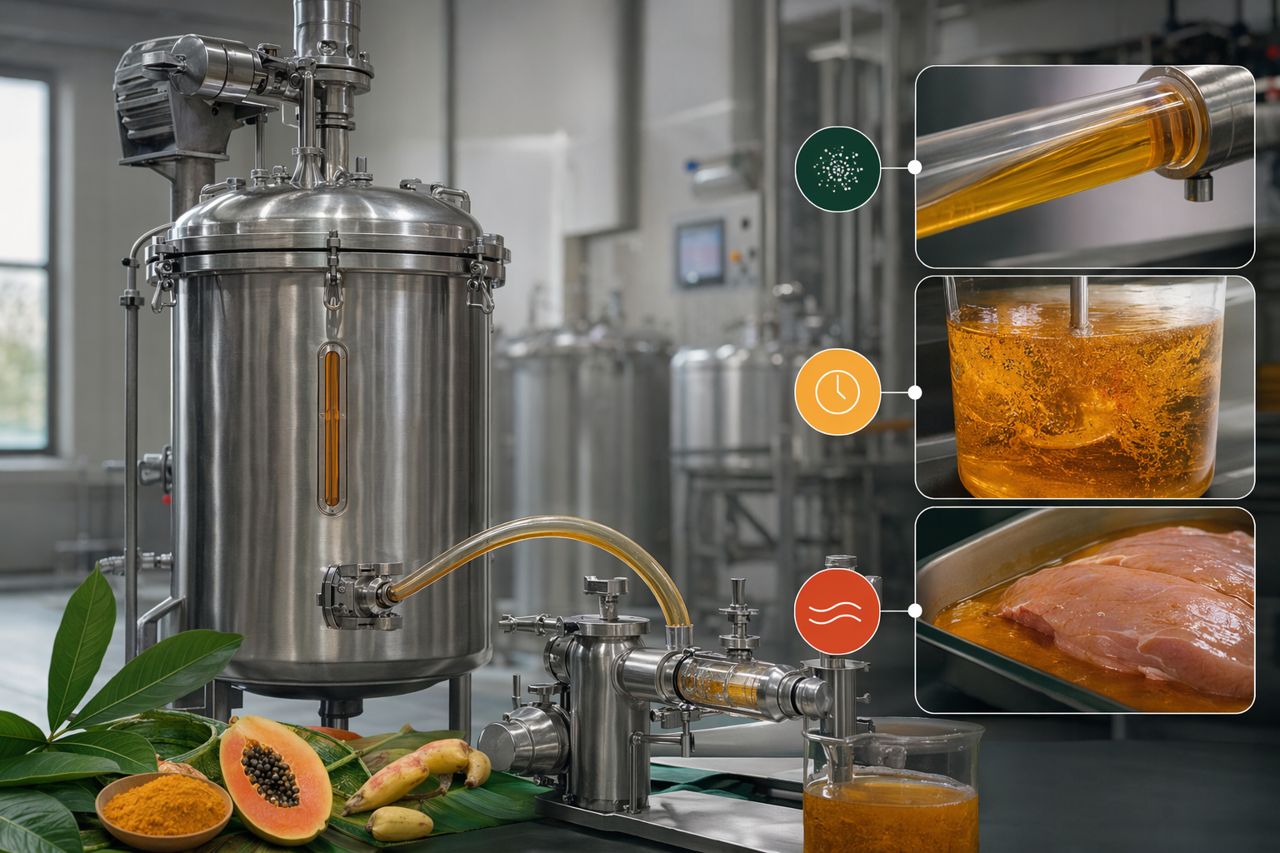
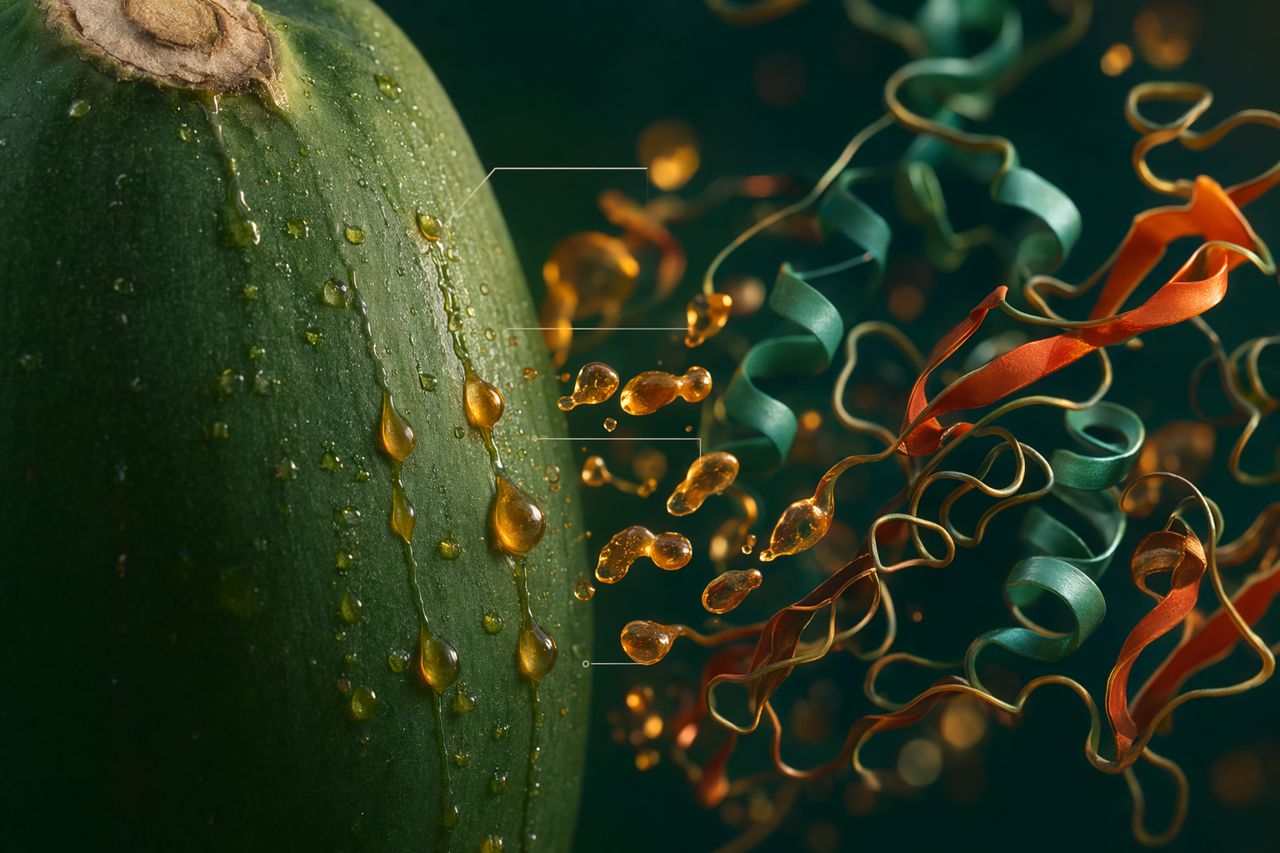
Papain is a plant-derived protease used by meat processors to improve tenderness, reduce bite resistance, and create more consistent eating quality across variable raw materials. For formulation scientists and process engineers, the value is not simply “softening.” It is controlled hydrolysis: enough protein modification to improve texture, without pushing the product toward mushiness, edge breakdown, or excessive purge.
Papain Enzyme Solutions supplies Papain in bulk to meat processors, marinade and seasoning manufacturers, distributors and resellers, for industrial tenderizing systems where dispersion, process fit, documentation, and lot-to-lot consistency matter as much as enzyme performance.
Buying for a plant or for resale? Tenderizing papain is quoted per order; send the meat products, quantity and destination. Request a quote.
Why papain works in meat systems
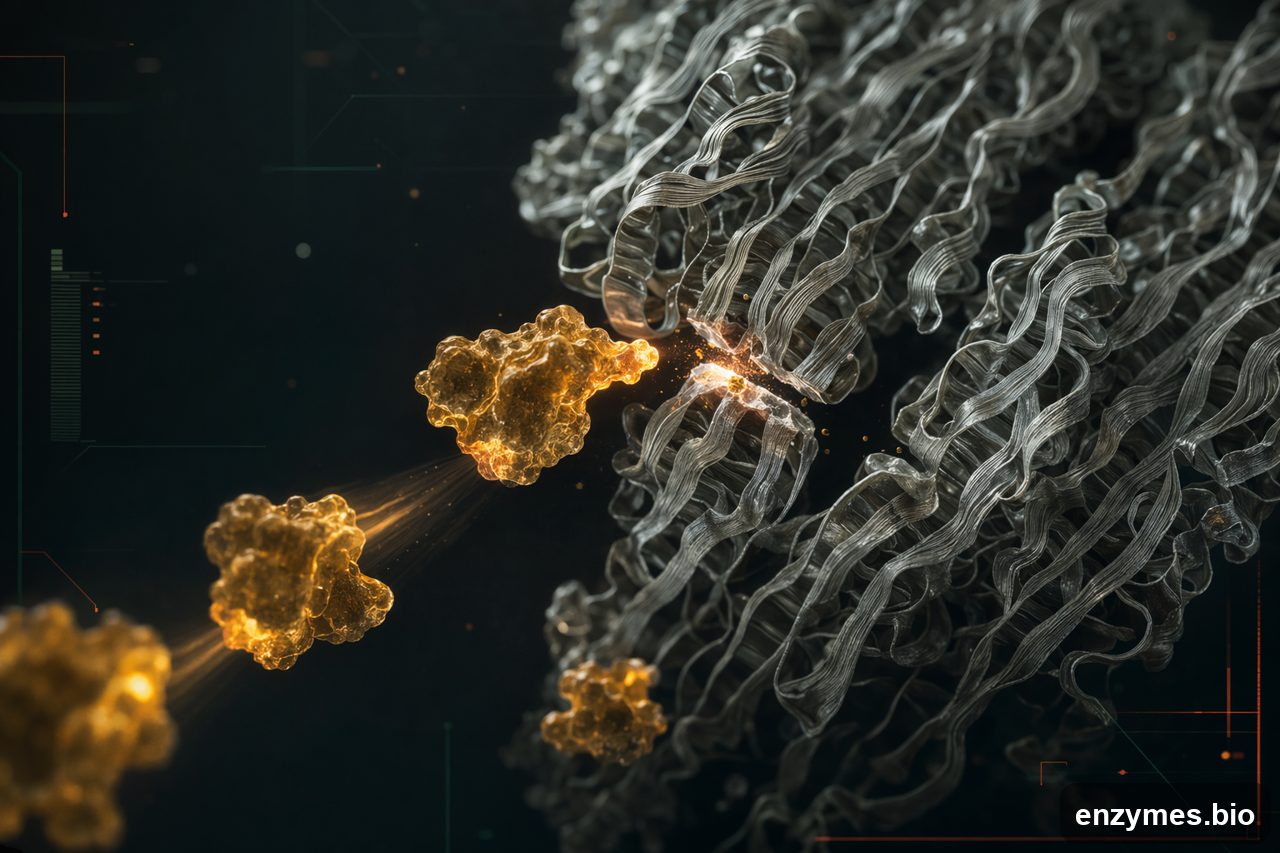
Papain hydrolyzes muscle proteins and related protein structures that contribute to toughness. In practical processing terms, it can help convert a difficult cut, a variable incoming supply, or a short marination window into a more predictable finished texture.
Key functional outcomes include:
- Improved tenderness in beef, poultry, and value-added meat systems
- Reduced chewing resistance while maintaining product identity
- Better consistency across variable raw material lots
- Shorter or more flexible tenderizing process windows when properly validated
- Enhanced marinade or seasoning performance through improved protein interaction
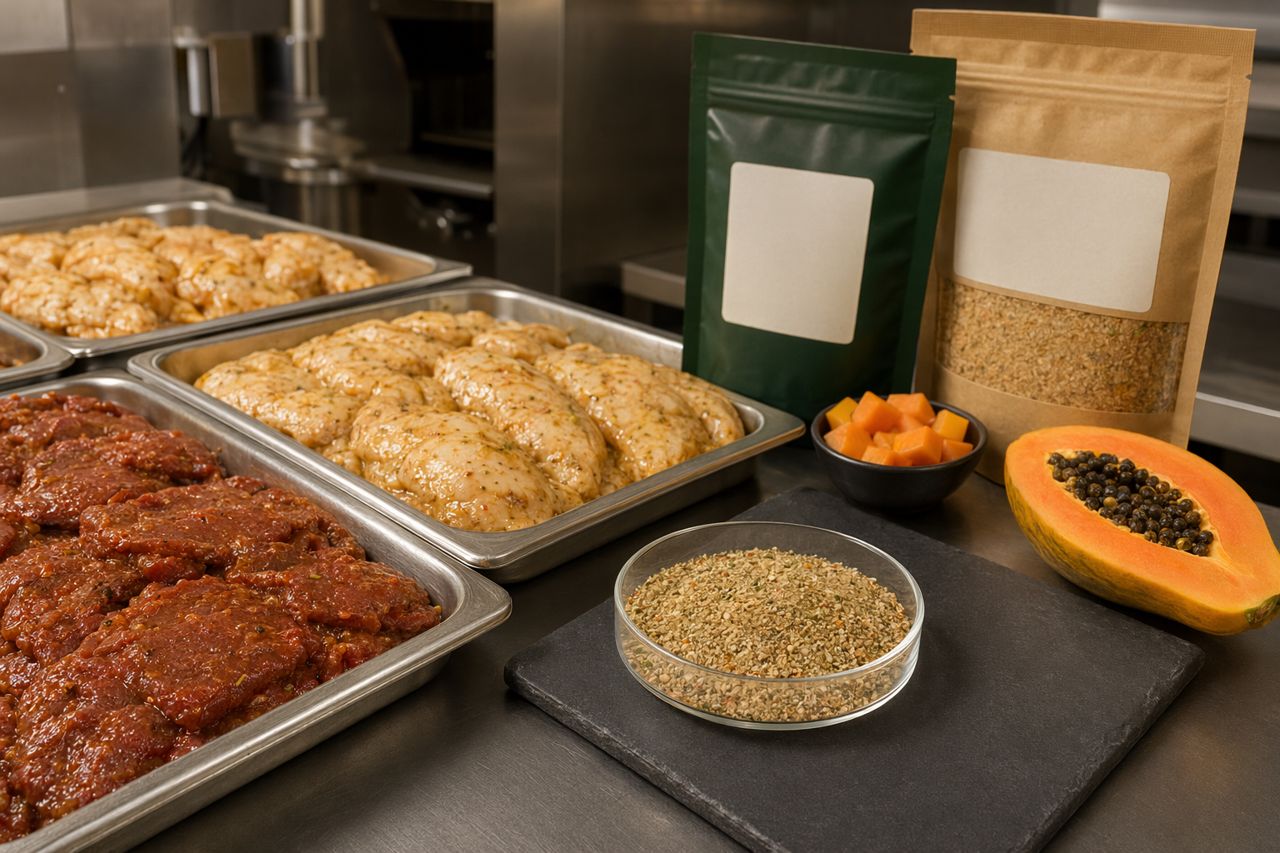
- Support for injection, tumbling, immersion, and dry-blend applications
Papain is especially useful where processors need a botanical tenderizing tool that can be formulated into liquid or dry systems and tuned around contact time, temperature, pH, salt level, moisture, and distribution method.
Application areas
Beef tenderizing
Papain can be used to improve the eating quality of steaks, strips, cubes, fajita meat, further-processed beef, and other cuts where connective tissue and muscle structure create variability. It is commonly evaluated in systems where tenderness must be improved without masking the beef profile or creating a cooked texture that feels over-processed.
Typical formulation considerations include cut thickness, muscle type, surface area, marination time, thermal process, and whether the enzyme is applied by surface treatment, vacuum tumbling, injection, or a seasoning carrier.
Poultry processing
In poultry, papain may support tenderness in breast meat, strips, diced products, skewers, and marinated portions. The control target is often narrower than in tougher red meat applications: improve bite and juiciness perception while protecting structure, sliceability, and cook yield.
Process teams should evaluate distribution uniformity carefully. Over-concentration at the surface can create soft edges, while poor penetration can leave texture variation inside the piece.
Marinades and injection systems
Papain can be incorporated into liquid marinade or brine systems when the formulation is designed for enzyme compatibility. Salt, acids, phosphates where permitted, sugars, spices, colors, and flavor systems can all influence dispersion and finished performance.
For injection systems, solubility, filtration strategy, line hygiene, hold time, and tank agitation become central to process control. The goal is even enzyme delivery without clogging, sedimentation, or localized over-tenderizing.
Dry tenderizer blends
Papain is widely used in dry seasoning and tenderizer blends for foodservice, industrial further processing, and private-label products. In dry systems, carrier choice and blend uniformity are critical. The enzyme must remain evenly distributed so the end user receives predictable tenderizing performance portion after portion.
Carriers, anti-caking systems, spice particle size, moisture control, and packaging barrier properties should all be reviewed during development.
Beyond steaks: tripe, offal and hotpot ingredients
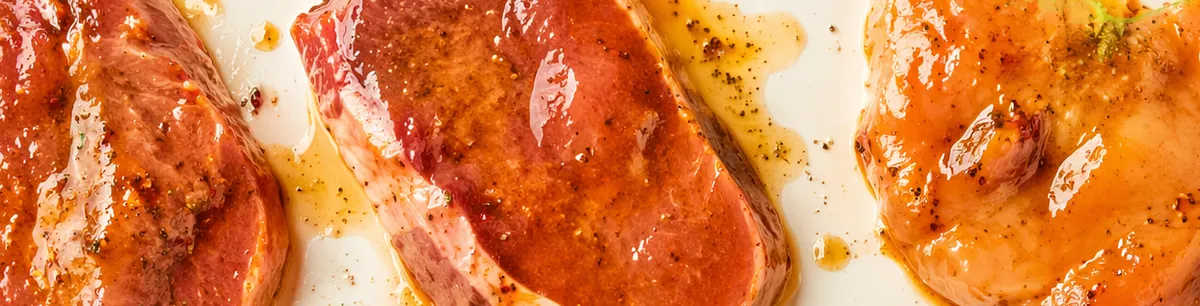
Producers of hotpot ingredients describe the texture problem in plain terms: tripe stays hard and chewy even when the cooking time is right, beef dries out if it cooks too long, and duck intestine loses its crispness. The result they want from an enzyme step is uniform, crisp and tender tripe, beef that stays juicy and keeps enough fibre structure to take up broth flavour, and duck intestine that stays crisp through long cooking without going mushy. Only a small addition per batch of tripe is needed, so set the level by trial on your own raw material.
What papain does inside the meat
Papain loosens muscle fibres and breaks down collagen, and that breakdown releases amino acids and peptides that add to flavour. That is why it suits collagen-rich offal, and why contact must not be left open-ended.
| Product | Texture target | Main risk |
|---|---|---|
| Beef tripe | Uniform, crisp and tender | Staying hard and chewy |
| Sliced beef for hotpot | Tender and juicy, fibres still intact | Drying out or going soft |
| Duck intestine | Crisp after long cooking | Turning mushy |
Trial checklist for offal lines
- Set the level by trial on each raw material, starting from a small addition per batch.
- Check duck intestine for mushiness after long cooking, its typical failure.
- Judge texture after the product has been cooked the way the end customer cooks it, including long simmering in broth.
Formulation and process controls
Papain performance is shaped by both the enzyme and the process around it. A tenderizing program should be validated against the specific meat matrix, finished product standard, and distribution method.
Important control points include:
-
Contact time
Longer exposure increases protein hydrolysis. The correct window depends on raw material, product size, temperature, and target texture. -
Temperature profile
Papain performance changes with temperature. Chilled holding, marination, tempering, and cooking steps should be mapped together rather than treated separately. -
pH and salt environment
Marinade pH, salt concentration, acidity, buffers, and seasoning systems can influence enzyme behavior and sensory outcome. -
Distribution method
Surface application, tumbling, injection, and dry coating each create different penetration patterns and control risks. -
Thermal endpoint
Downstream cooking can limit further enzyme action. The thermal process should be included in validation, especially for ready-to-cook or partially processed items.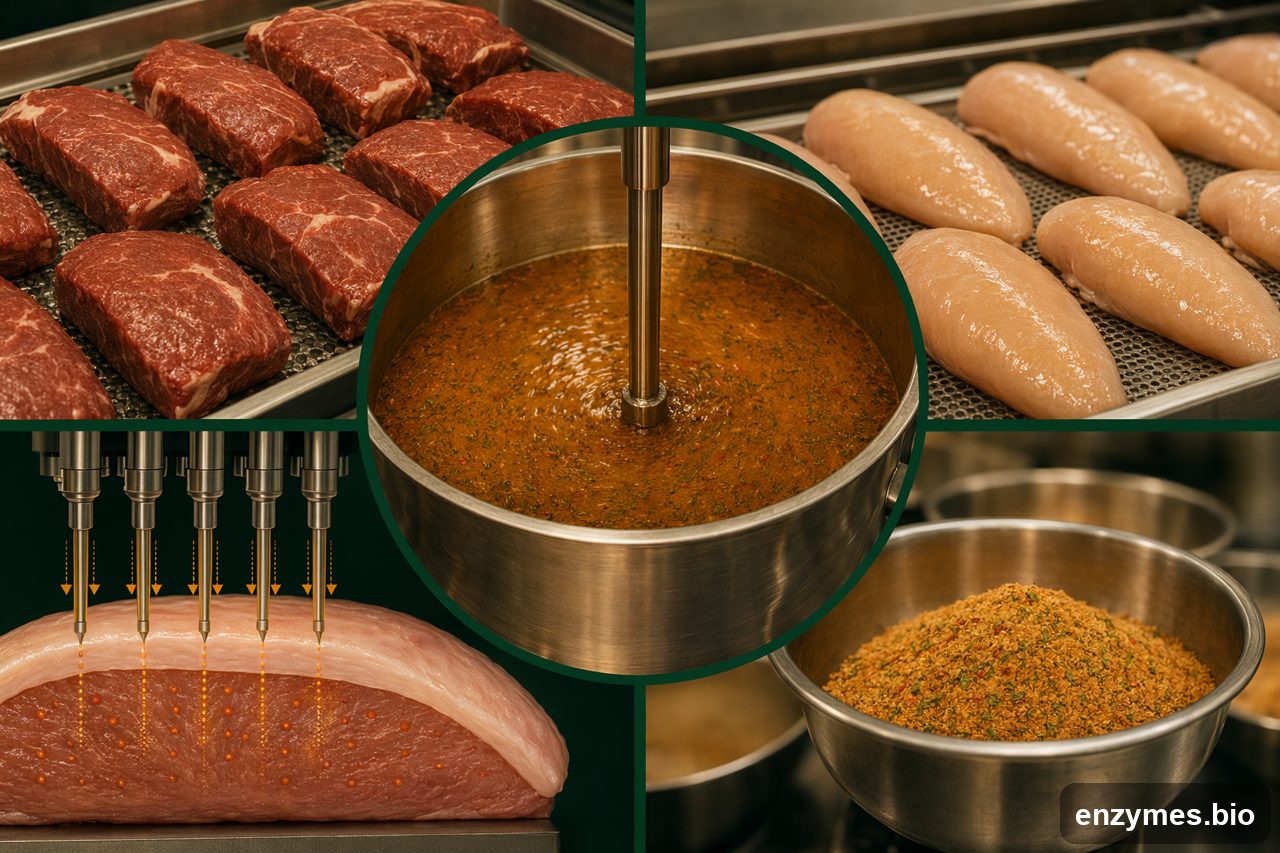
-
Sensory definition
Tenderness should be defined by the product brief: bite, chew, juiciness perception, slice integrity, purge, edge texture, and appearance.
Benefits for industrial buyers
For formulation scientists
- Develop tenderizing systems with a clear proteolytic mechanism
- Tune texture while preserving product identity
- Build papain into marinades, injections, rubs, and seasoning systems
- Evaluate compatibility with flavor, salt, acid, and processing aids
- Support sensory targets with controlled process trials
For process engineers
- Improve tenderness without relying only on mechanical intervention
- Build more flexible marination or holding windows
- Reduce texture variability caused by raw material inconsistency
- Integrate enzyme application into existing tumblers, injectors, mixers, or coating lines
- Define practical controls for time, temperature, agitation, and thermal stop points
For procurement teams
- Source papain with documentation aligned to B2B qualification
- Reduce supply risk through clear specification review
- Evaluate packaging, storage, shelf-life, and traceability requirements
- Support multi-site production with consistent purchasing criteria
- Qualify material for both pilot development and scaled manufacturing
Product format and handling options
Papain Enzyme Solutions can support papain requirements for dry and application-ready formulation work. Final format selection depends on the plant environment, blending system, distribution method, and documentation requirements.
Common commercial considerations include:
- Powder format for dry tenderizer blends and seasoning premixes
- Dispersible formats for marinade and brine development
- Packaging suitable for industrial handling and controlled storage
- Documentation for ingredient qualification and quality review
- Lot traceability for production and audit readiness
Storage and handling procedures should protect the enzyme from excess heat, moisture, and avoidable exposure during production. As with any proteolytic ingredient, worker handling practices and dust control should be reviewed under the facility’s safety program.
Avoiding over-tenderizing
Papain is effective, which means it must be controlled. Over-tenderizing can appear as soft surface texture, weak slice integrity, mealy bite, excess purge, or a perception that the meat structure has been compromised.
To reduce those risks:
- Start with a defined sensory target
- Validate on the actual meat cut or product form
- Control contact time and temperature
- Confirm distribution uniformity
- Include the cooking process in the trial design
- Evaluate finished texture after realistic chilled or frozen storage conditions
- Compare against both untreated control and current commercial benchmark
Development pathway
A practical papain tenderizing project typically moves through four stages:
1. Product mapping
Define the meat type, cut, portion geometry, marinade or seasoning system, process flow, cooking method, and desired eating quality.
2. Bench screening
Evaluate papain behavior in small trials, focusing on texture, purge, appearance, flavor release, and compatibility with the rest of the formulation.
3. Pilot validation
Run the selected approach through realistic equipment conditions: mixing, tumbling, injection, coating, holding, packaging, storage, and cooking.
4. Scale-up control
Lock the process window, packaging format, storage conditions, quality checks, and purchasing specification before routine production.
What to discuss with Papain Enzyme Solutions
When requesting pricing or technical support, include as much of the following as possible:
- Meat type and target product format
- Current tenderizing method, if any
- Marinade, brine, or dry blend format
- Application method: surface, tumble, injection, immersion, or dry mix
- Process temperatures and holding times
- Desired texture outcome and current defect pattern
- Required packaging size or annual volume range
- Documentation requirements for purchasing and quality approval
Request a quote or get pricing
Share your application details and the Papain Enzyme Solutions team will respond with pricing, availability, and the documentation needed for qualification.
Frequently asked questions
Is papain suitable for both beef and poultry?
Yes. Papain can be evaluated in both beef and poultry tenderizing systems, but the process window should be developed separately for each matrix. Muscle structure, portion size, marinade chemistry, and thermal process all affect the result.
Can papain be used in a dry tenderizer blend?
Yes. Papain can be formulated into dry blends when carrier selection, particle distribution, moisture control, and packaging are properly managed. Blend uniformity is essential for predictable use.
Can papain be used in injection brines?
Papain may be used in injection systems when the formulation is designed for dispersion, equipment compatibility, and process control. Filtration, tank agitation, line hold time, and sanitation procedures should be reviewed during pilot trials.
Does papain affect flavor?
Papain’s primary role is protein hydrolysis. However, texture changes can influence flavor perception, juiciness perception, and seasoning release. Sensory evaluation should compare treated samples against untreated controls and the commercial target.
How should the right level be selected?
The right level depends on the meat matrix, process time, temperature, pH, salt system, application method, and target tenderness. Papain Enzyme Solutions supports qualification through application review and structured trial planning rather than one-size-fits-all assumptions.
Request a wholesale quote
We supply papain for beef, poultry, offal and hotpot-ingredient tenderizing in bulk to manufacturers, distributors and resellers, on a quote-only basis. To get a recommendation and a price, send: the product or application, the quantity (trial lot, monthly or annual), the destination country, and the process step where the papain will be used. Format (powder or liquid) and pack size are quoted per order; tell us your preference if you have one.