Papain Enzyme Knowledge for Industrial Buyers
Papain is not a commodity when it enters a production line. It is a processing lever: a botanical protease used to shape texture, release peptides, clarify proteinaceous haze, support controlled exfoliation, and improve downstream handling where protein modification is the target.
CarikaForge is built for the teams who need Papain decisions to be technically defensible before a purchase order is opened: formulation scientists, procurement managers, QA teams, and process engineers aligning enzyme performance with yield, sensory quality, consistency, and operating risk.
Request a quote or use the form below to get pricing for a Papain grade matched to your application, documentation needs, and projected volume.
What Papain Is
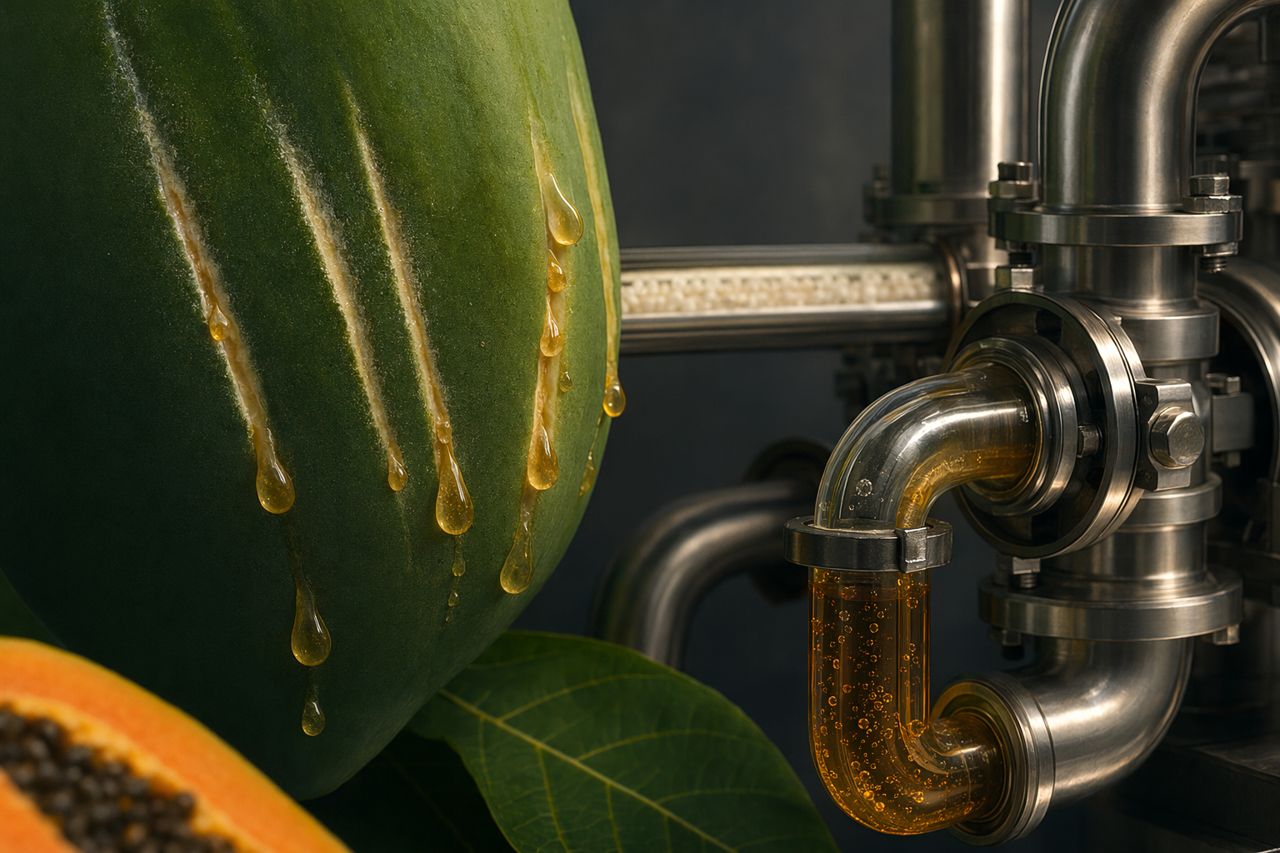
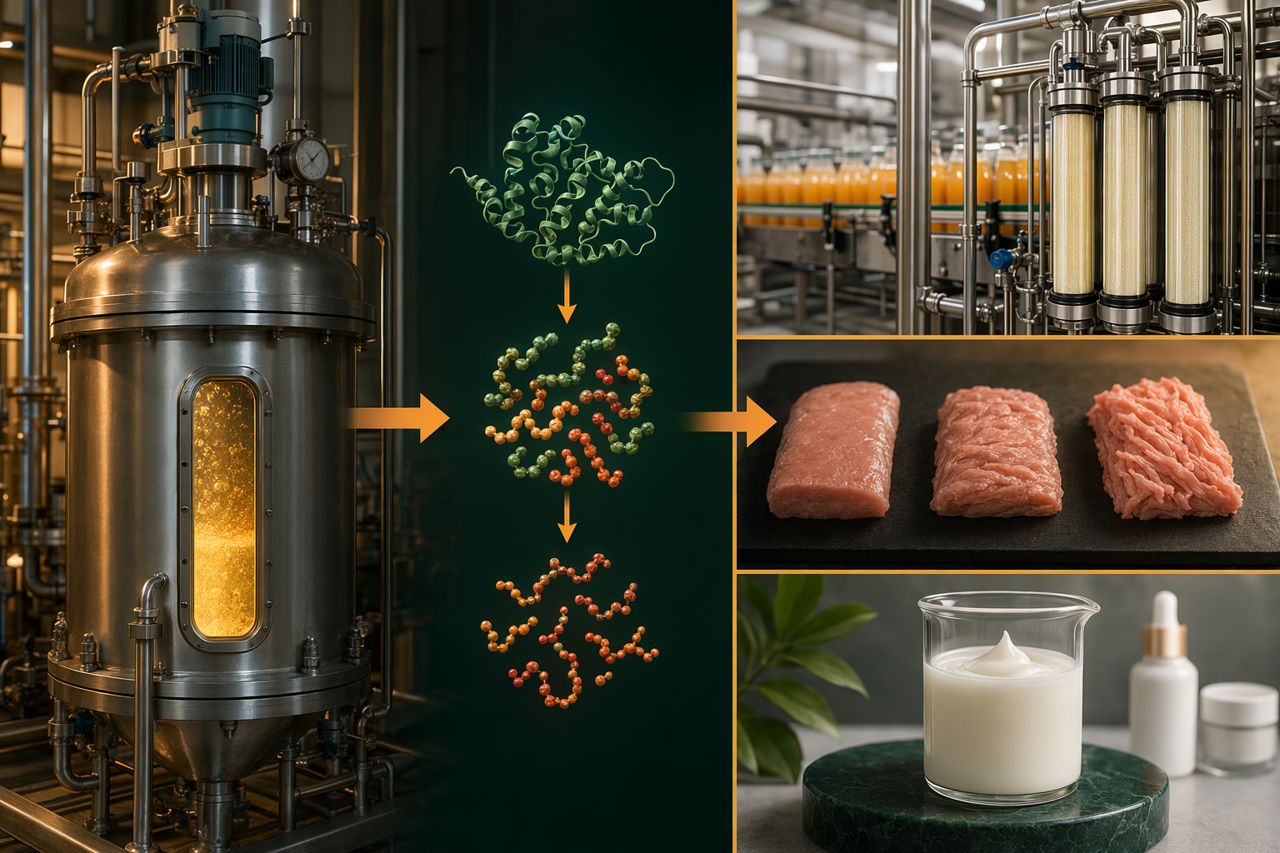
Papain is a cysteine protease derived from papaya latex. In industrial use, it is valued for its ability to cleave protein structures under comparatively mild processing conditions. That makes it relevant across food, beverage, nutrition, cosmetic, and technical processing applications where the goal is controlled protein breakdown rather than broad chemical treatment.
For buyers, the important question is not simply whether a product is labeled Papain. The practical question is whether its format, purity profile, solubility behavior, carrier system, allergen position, origin documentation, and handling characteristics fit the intended process.
Where Industrial Buyers Use Papain
Meat and Seafood Processing
Papain is widely evaluated for tenderizing systems where controlled proteolysis improves bite, chew, and perceived juiciness. The formulation challenge is restraint: excess exposure can create mushy texture, purge, or uneven bite. A good specification considers application method, dwell time, matrix thickness, distribution uniformity, and inactivation strategy.
Protein Hydrolysis and Flavor Systems
In hydrolysate production, Papain can support peptide release, functional modification, and flavor development. Buyers typically assess clarity, bitterness risk, peptide distribution, filtration behavior, and compatibility with other processing aids. The right Papain grade should be chosen around the desired hydrolysis profile, not just price per kilogram.
Brewing, Beverage, and Clarification
Papain can help manage protein-related haze and improve filtration behavior in selected beverage processes. The commercial value is often seen in visual stability, shorter processing bottlenecks, and fewer rejected batches. Documentation and consistency matter because beverage systems are highly sensitive to over-treatment and sensory drift.
Bakery and Dough Conditioning
In bakery systems, Papain may be used where partial protein modification helps adjust dough handling, extensibility, or texture. It should be specified with attention to flour variability, mixing sequence, contact time, and interaction with oxidants, emulsifiers, or other enzymes.
Cosmetic and Personal-Care Formulation
Papain is used in exfoliating and skin-smoothing concepts where enzyme-driven protein action is positioned as a functional alternative to more aggressive mechanical or acidic systems. Personal-care buyers should focus on particle profile, carrier compatibility, preservation strategy, irritation risk, and regulatory documentation.
How to Specify Papain Without Overbuying or Undercontrolling
A strong Papain RFQ should include the process outcome you need, not just a product name. Use this checklist before requesting pricing:
- Application target: tenderizing, hydrolysis, clarification, dough conditioning, exfoliation, or another use case.
- Matrix type: meat, fish, plant protein, dairy protein, cereal system, beverage base, cosmetic emulsion, or dry blend.
- Preferred format: powder, granular, liquid, immobilized concept, or custom premix.
- Carrier and excipient limits: clean-label goals, allergen constraints, vegan requirements, sugar or salt restrictions, and prohibited additives.
- Solubility and dispersion needs: fast hydration, low dusting, pre-blend compatibility, or controlled release.
- Process window: pH environment, thermal exposure, contact time, shear, and inactivation approach.
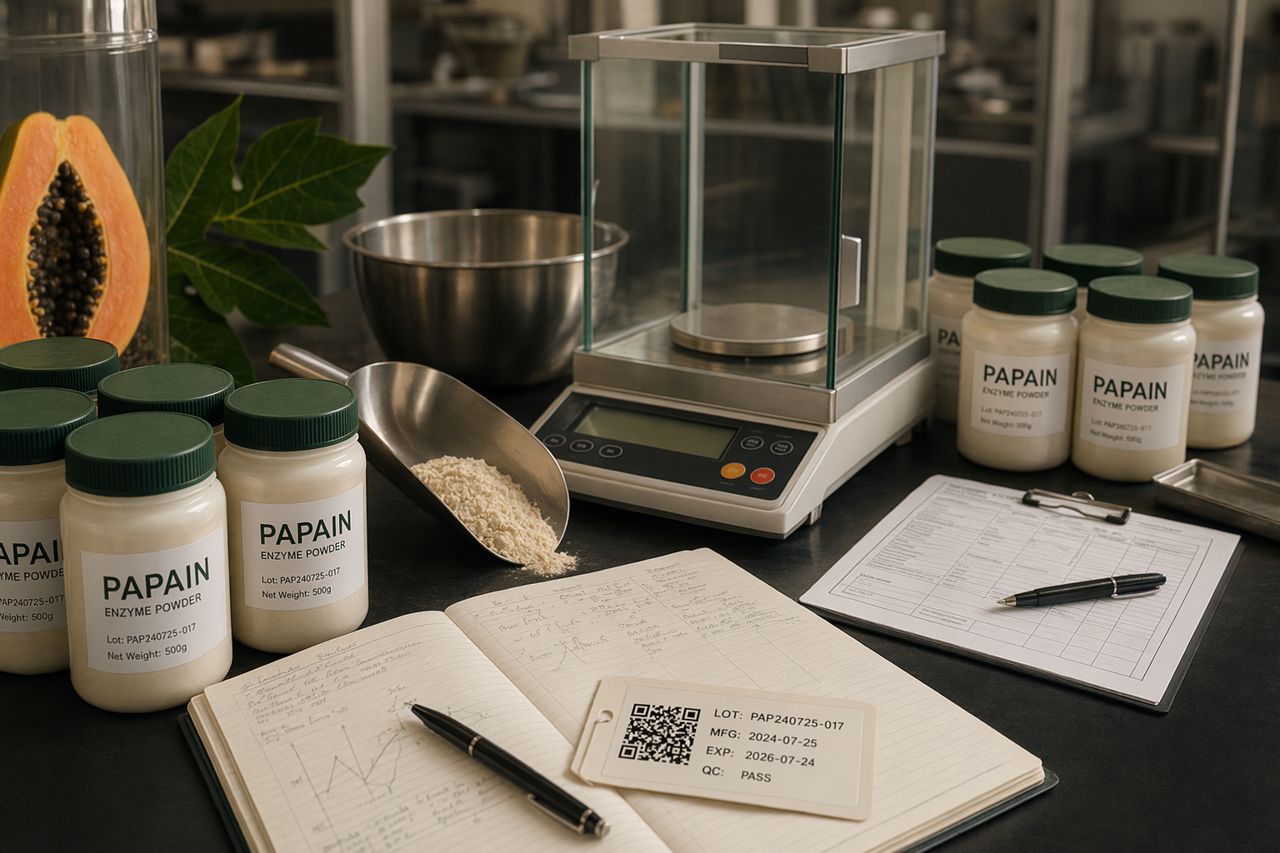
- Documentation: specification sheet, COA, origin statement, food-grade or cosmetic-grade positioning, allergen statement, non-GMO position, regulatory support, and traceability.
- Packaging and logistics: pack size, moisture protection, shelf-life expectations, palletization, export documentation, and storage conditions.
- Commercial scale: development, pilot, first production run, recurring contract volume, or multi-site supply.
Grade Selection: What Actually Changes Performance
Botanical Origin and Raw Material Control
Papain quality begins with latex collection and upstream handling. Variability in botanical material can translate into differences in proteolytic behavior, color, odor, and impurity profile. For procurement teams, consistent sourcing and batch documentation reduce reformulation risk.
Physical Format
Powdered Papain can be efficient for dry blending and concentrated formulation work. Granular formats may reduce dusting and improve handling. Liquid formats may simplify metering and dispersion when the system supports enzyme stability. The best format is the one that your operators can dose consistently and your QA team can control.
Carrier System
Carriers are not neutral. They can influence flow, dissolution, label position, allergen review, and compatibility with final product standards. Buyers should ask for carrier disclosure appropriate to the intended market and confirm whether the carrier affects downstream sensory or analytical targets.
Process Fit
Papain performance depends on the environment in which it is used. Contact time, pH, temperature exposure, moisture, substrate accessibility, and competing ingredients all affect outcomes. A technically sound purchase starts with process context.
Quality Questions to Ask Before Awarding Supply
Use these questions to compare Papain offers with more precision:
- Is the material intended for food, cosmetic, technical, or another regulated use?
- What physical form is supplied, and how does it behave in dosing and dispersion?
- What documentation is available with each lot?
- Are carrier materials fully disclosed for your compliance review?
- How is batch consistency monitored without relying only on headline claims?
- What packaging protects the enzyme during storage and transit?
- What lead time is typical for sample, pilot, and recurring production volumes?
- Can the grade be adjusted for dust control, solubility, or blending requirements?
- What information is needed to quote accurately for your application?
Why CarikaForge Frames Papain Around Industrial Outcomes
Papain sourcing is most successful when technical and commercial requirements are aligned early. A low-cost grade that creates inconsistent texture, filtration losses, off-notes, dust exposure, or documentation gaps can become more expensive than a properly specified material.
CarikaForge helps buyers evaluate Papain around the outcomes that matter in production:
- repeatable processing behavior;
- improved yield protection through controlled protein modification;
- sensory quality that does not drift across lots;
- practical handling for operators;
- documentation that supports QA and customer review;
- packaging and logistics matched to real throughput.
Request a Quote or Get Pricing
Share your application, target format, documentation requirements, and estimated volume. The CarikaForge team will review the process context and respond with Papain grade guidance and pricing direction.
Before You Submit
If available, include your substrate, process sequence, target result, packaging preference, and any customer-specific documentation requirements. Better context leads to a more accurate Papain recommendation and a cleaner commercial quotation.